
By Godwin Mayanja
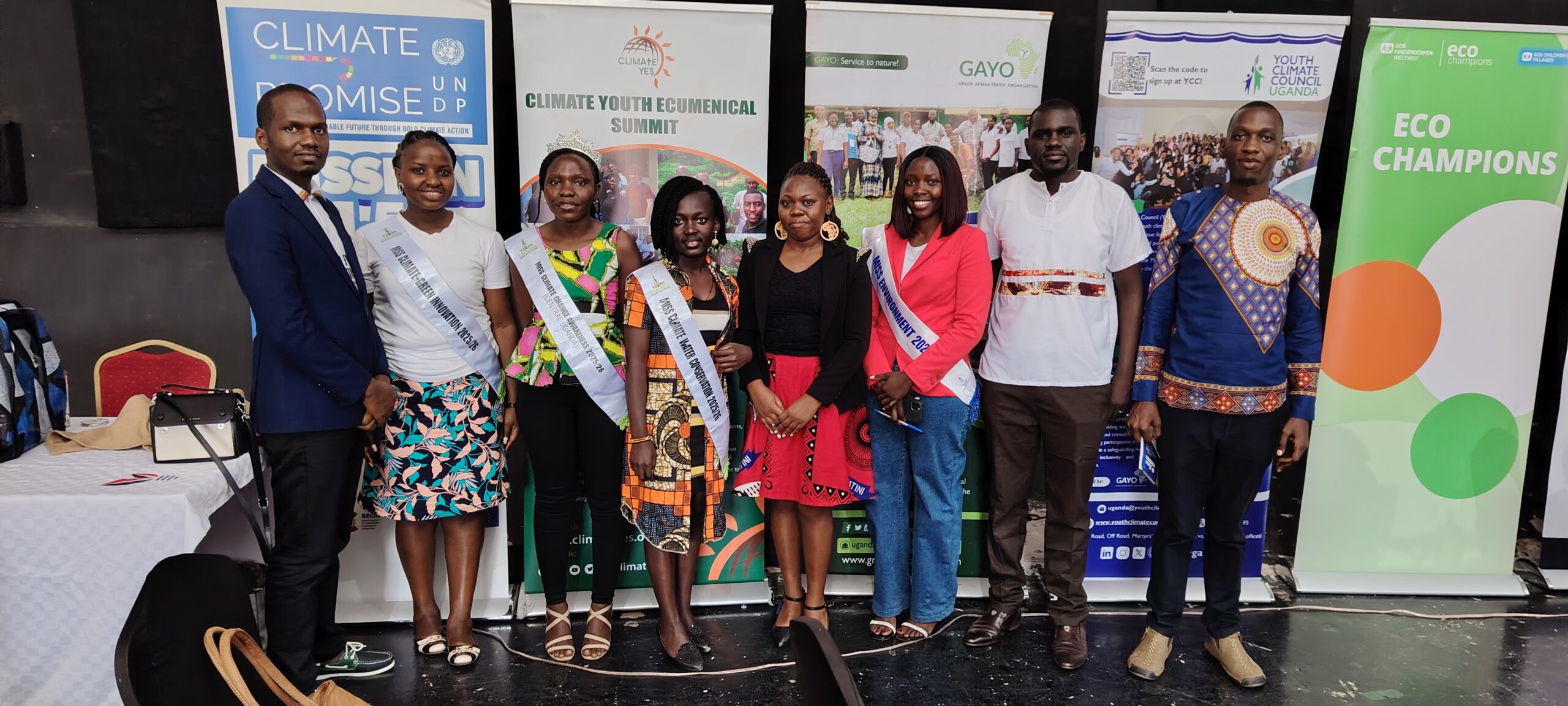
It was such a memorable moment for 10 Climate YES Uganda members to participate in LCOY Uganda 2025 that happened between 29 th to 31 st July 2025 themed, “From play to policy: Young minds with green solutions.” Ahead of the final day of LCOY Uganda, was a two day training workshop at GIZ Office Kampala where young people were prepared as next national climate negotiators. The training included;
-
- Discussion on the UNFCCC processes and a history of outcomes from the different COPs since signing of the Paris Agreement.
- Climate Finance (Adaptation& Mitigation), types of Loss and Damage and the different milestones up to COP29.
- Climate Change Negotiations, what happens in the negotiation room, negotiation tactics as well as qualities of a good negotiator.
- Clean energy and green jobs

Through the training, we learnt about the government of Uganda’s commitments to clean cooking through provision of gas cylinders, mini solar grids to provide electricity to remote communities and scaling up climate finance locally through engaging local investors to contribute towards the fund. Uganda’s Climate Finance ambitions ahead of 2030 include an total NDC cost of USD 28.1 billion, with Adaptation actions projected at USD 17.7 billion, Mitigation at USD 10.3 billion and USD 0.1 billion for cross cutting issues.
Ahead of COP30, the government of Uganda seeks for a funding to implement the outcomes of its sectorial technology needs assessment. The participants of the two day training got an opportunity to contribute to the National Youth and Children‘s Climate Change statement 2025 that will inform negotiations ahead of COP30 in Belem Brazil. The statement highlighted the following;
- Tracking and implementation of Uganda’s NDCs with a critical call for youth inclusion.
- It highlighted the invisibility of youth in refugee camps, gender inequality and exclusion of those living with disabilities.
- A critical call for climate literacy, capacity building and Education among the youth.
Climate YES Uganda members represented the voice of the young Christians and the church in these discussions as we continue to influence policy change and concrete action for climate justice in our communities.
Leave a Reply